From Semaglutide to Retatrutide: The Science Behind Single, Dual, and Triple Receptor Agonists
Healthaide Insights
•
From Semaglutide to Retatrutide: The Science Behind Single, Dual, and Triple Receptor Agonists
Weight loss medications have undergone three generations of evolution in under a decade. Each generation targets more receptors, produces greater weight loss, and raises new questions about safety and long-term outcomes.
Here is where the science stands today.
How GLP-1 Receptor Agonists Work
GLP-1 is an incretin hormone your gut releases after eating. It tells your pancreas to produce insulin, tells your liver to stop dumping glucose, slows gastric emptying, and signals your brain that you are full.
The problem: natural GLP-1 gets broken down in minutes.
GLP-1 receptor agonists are synthetic versions engineered to last days instead of minutes. They achieve supraphysiological concentrations that amplify all of those natural effects. The result is sustained appetite suppression, reduced visceral fat, and improved metabolic markers across the board.
This is the foundation every modern weight loss medication builds on.
Generation One: Semaglutide
Semaglutide (brand names Ozempic, Wegovy, Rybelsus) is a selective GLP-1 receptor agonist. It targets one receptor. It is the most studied agent in the class and carries the most FDA approvals: type 2 diabetes, chronic weight management, cardiovascular risk reduction, chronic kidney disease in T2D, and MASH with moderate-to-advanced fibrosis.
Weight loss: The STEP trials showed semaglutide 2.4 mg weekly producing average weight reductions of roughly 16.7% over two years.
Cardiovascular protection: The SELECT trial enrolled over 17,600 patients with obesity and established cardiovascular disease but without diabetes. Semaglutide reduced the risk of major adverse cardiovascular events (cardiovascular death, nonfatal heart attack, or nonfatal stroke) by 20%. That benefit appeared independent of how much weight patients lost, suggesting semaglutide may act as a cardiovascular disease-modifying agent beyond its metabolic effects.
Semaglutide has also demonstrated benefits in heart failure with preserved ejection fraction, diabetic kidney disease, and fatty liver disease. In the ESSENCE trial, 62.9% of patients achieved MASH resolution compared to 34.3% on placebo.
No other weight loss medication has this depth of outcomes data.
Generation Two: Tirzepatide
Tirzepatide (Mounjaro, Zepbound) is a dual GIP and GLP-1 receptor agonist. Two receptors instead of one. It is FDA-approved for type 2 diabetes, chronic weight management, and obstructive sleep apnea in obesity.
Weight loss: In SURMOUNT-1, tirzepatide at 15 mg produced average weight reductions of approximately 21% at 72 weeks in adults with obesity without diabetes. In the first head-to-head trial against semaglutide (SURMOUNT-5), tirzepatide achieved 20.2% weight loss versus 13.7% with semaglutide. Nearly half of tirzepatide patients lost 20% or more of their body weight, compared to about a quarter on semaglutide.
Why two receptors matter: GIP receptors are expressed on adipocytes (fat cells) and in areas of the central nervous system that do not overlap with GLP-1 receptor expression. Engaging both pathways produces complementary effects on appetite, fat metabolism, and glucose control that neither receptor can achieve alone.
Cardiovascular and metabolic outcomes: In the SURPASS-CVOT trial, tirzepatide was noninferior to dulaglutide for cardiovascular events while delivering substantially greater reductions in HbA1c and body weight. In the SYNERGY-NASH trial, up to 62% of patients achieved MASH resolution. And in diabetes prevention data, tirzepatide reduced the risk of progression to type 2 diabetes by 93% over 176 weeks.
Generation Three: Retatrutide
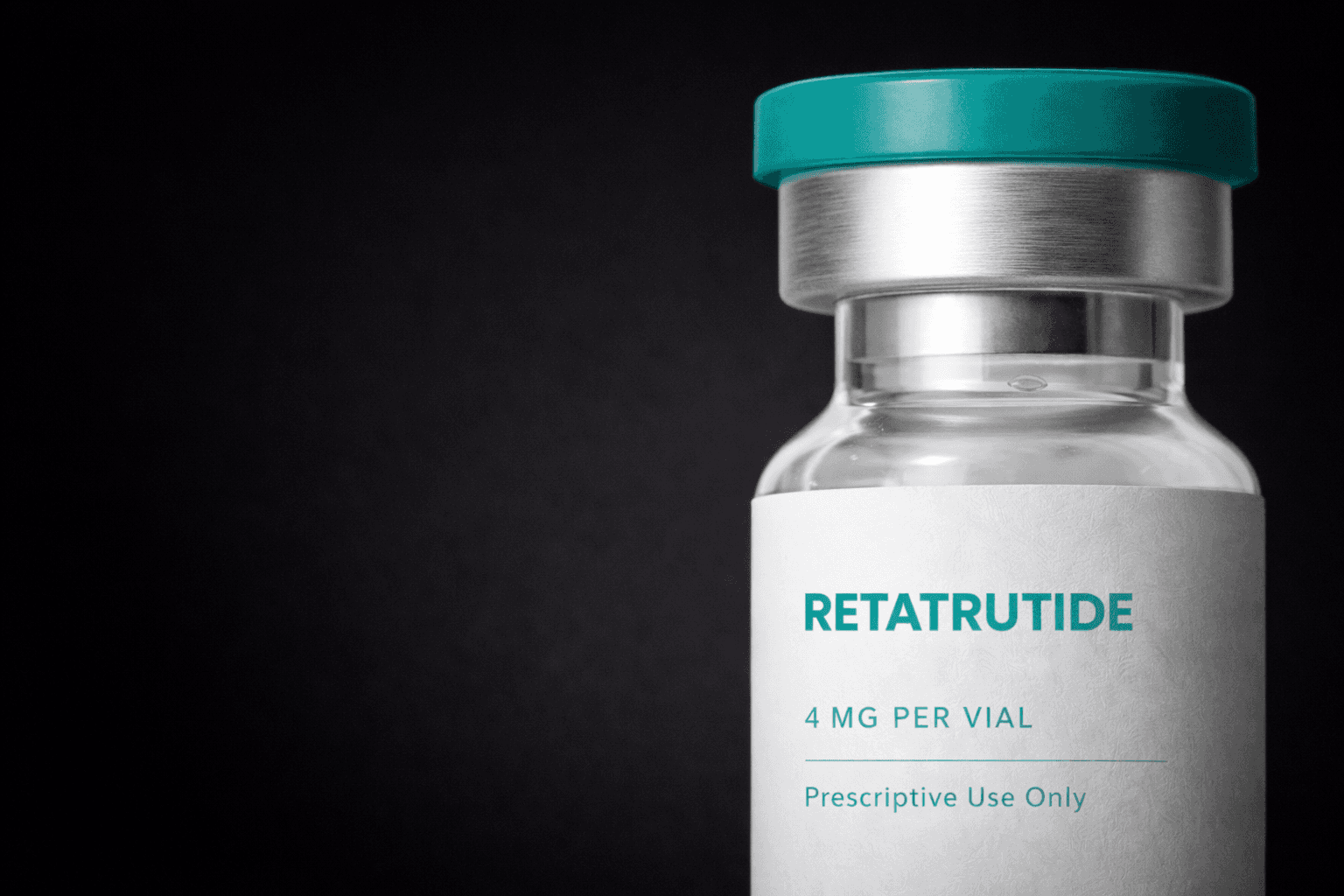
Retatrutide (LY3437943, Eli Lilly) is the first triple receptor agonist: GIP, GLP-1, and glucagon. Three receptors. It is currently in phase 3 trials and is not yet FDA-approved.
Why Add Glucagon?
This is the counterintuitive part. Glucagon raises blood sugar. It seems like the last thing you would want in a metabolic medication.
But glucagon also increases energy expenditure, stimulates lipolysis (fat breakdown), enhances fatty acid oxidation, and improves lipid metabolism in the liver. The concurrent GLP-1 and GIP activity counterbalances the hyperglycemic risk. Preclinical studies confirmed that retatrutide's glucagon component drove additional weight reduction specifically through increased energy expenditure, not just appetite suppression.
In other words: semaglutide and tirzepatide primarily reduce energy intake. Retatrutide reduces energy intake and increases energy output.
Phase 2 Weight Loss Data
In a phase 2 trial of 338 adults with obesity, retatrutide 12 mg weekly for 48 weeks produced a mean weight reduction of 24.2% versus 2.1% on placebo. The response rates were striking:
100% of participants on the 8 mg and 12 mg doses lost at least 5% of body weight
93% on 12 mg lost at least 10%
83% lost at least 15%
Nearly half lost at least 25%
A quarter lost 30% or more
Weight loss had not plateaued at 48 weeks, meaning longer treatment would likely produce even greater reductions. These numbers approach bariatric surgery territory from a weekly injection.
Phase 2 Diabetes Data
In 281 participants with type 2 diabetes, retatrutide at 12 mg reduced HbA1c by up to 2.16% and body weight by up to 16.9% over 36 weeks. Up to 82% achieved an HbA1c below 5.7%, the threshold for normal glucose tolerance. Among participants with prediabetes at baseline, 72% reverted to normoglycemia.
LDL cholesterol dropped approximately 20%, potentially through a glucagon-mediated mechanism involving PCSK9 degradation. Insulin sensitivity improved substantially.
Liver Fat
This may be the most impressive dataset. In a substudy of 98 patients with metabolic dysfunction-associated steatotic liver disease, retatrutide at 12 mg reduced liver fat by a mean of 82.4% at 24 weeks versus a 0.3% increase on placebo. By 48 weeks, roughly 90% of participants on higher doses achieved complete normalization of liver fat.
Body Composition
A DXA-based substudy showed that approximately two-thirds of weight lost was fat mass, with preferential loss of visceral (abdominal) fat. Lean mass loss did occur, which is a concern with any aggressive weight loss intervention and particularly relevant given chronic glucagon receptor activation. This will be an important area to monitor in phase 3 data.
Safety Profile
The side effect profile is broadly consistent with other GLP-1 based therapies. Gastrointestinal events (nausea, diarrhea, vomiting, constipation) were most common, occurring in up to 60% at higher doses. These were mostly mild to moderate and concentrated during dose escalation.
Two findings stand out as unique to retatrutide. First, cutaneous hyperesthesia (skin sensitivity) was reported in 7% of treated participants versus 1% on placebo. This has not been commonly observed with other agents. Second, lean mass loss is more pronounced than with single or dual agonists, likely related to the glucagon component.
No cases of medullary thyroid cancer, C-cell hyperplasia, or clinically significant hypoglycemia were reported. Treatment discontinuation due to adverse events ranged from 6% to 16% across dose groups.
Network Meta-Analysis
A 2025 Bayesian network meta-analysis of 19 randomized controlled trials found that retatrutide and dual agonists achieved equivalent mean absolute weight loss (roughly 11 kg), surpassing GLP-1 receptor agonists (roughly 9 kg). Where retatrutide separated itself was in the proportion of patients achieving clinically meaningful thresholds: the odds of losing 15% or more of body weight were approximately 55 times higher with retatrutide compared to placebo, versus 16 times higher with dual agonists and 9 times higher with GLP-1 receptor agonists.
The trade-off: retatrutide also carried the highest adverse event risk among the agents compared.
How They Compare
Semaglutide remains the gold standard for outcomes data. Twenty percent cardiovascular risk reduction, renal protection, liver disease resolution, heart failure improvement. No other agent in this class has that evidence base. Average weight loss around 17%.
Tirzepatide delivers superior weight loss (around 21%) and glycemic control through dual receptor engagement. Cardiovascular data shows noninferiority. Diabetes prevention data is remarkable (93% risk reduction). The outcomes evidence is growing but not yet as deep as semaglutide.
Retatrutide produces the most weight loss (24%+, not yet plateaued) and the most dramatic liver fat reduction of any pharmacotherapy ever studied. It does this by adding energy expenditure to the equation, not just appetite suppression. But it is still in phase 3. No cardiovascular outcomes data. No FDA approval. The lean mass question needs answers.
What This Means
The trajectory is clear. Each generation targets more biology and produces greater metabolic improvement. The question is no longer whether these medications work. It is how to match the right agent to the right patient, how to preserve lean mass during rapid weight loss, and how to manage long-term treatment.
Semaglutide is proven. Tirzepatide is better for weight loss. Retatrutide may redefine what pharmacotherapy can achieve.
Phase 3 data will tell us whether the promise holds.
This article is for informational purposes only and does not constitute medical advice. All treatment decisions should be made in consultation with a qualified healthcare provider.
Sources:
GLP-1 Receptor Agonists.
The New England Journal of Medicine. 2026. Rosen CJ, Ingelfinger JR.NewReview
Liraglutide for Adults Living With Obesity.
The Cochrane Database of Systematic Reviews. 2025. Meza N, Bracchiglione J, Escobar Liquitay CM, et al.New
Semaglutide for Adults Living With Obesity.
The Cochrane Database of Systematic Reviews. 2025. Bracchiglione J, Meza N, Franco JV, et al.New
Diabetic Agents, From Metformin To SGLT2 Inhibitors and GLP1 Receptor Agonists: JACC Focus Seminar.
Journal of the American College of Cardiology. 2020. Wilcox T, De Block C, Schwartzbard AZ, Newman JD.
FDA Orange Book.
FDA Orange Book. 2026.
Tirzepatide as Compared with Semaglutide for the Treatment of Obesity.
The New England Journal of Medicine. 2025. Aronne LJ, Horn DB, le Roux CW, et al.NewClinical Trial
Semaglutide and Cardiovascular Outcomes in Obesity without Diabetes.
The New England Journal of Medicine. 2023. Lincoff AM, Brown-Frandsen K, Colhoun HM, et al.RCT
Semaglutide and Cardiovascular Outcomes by Baseline and Changes in Adiposity Measurements: A Prespecified Analysis of the SELECT Trial.
Lancet. 2025. Deanfield J, Lincoff AM, Kahn SE, et al.New
Semaglutide Versus Placebo in Patients With Heart Failure and Mildly Reduced or Preserved Ejection Fraction: A Pooled Analysis of the SELECT, FLOW, STEP-HFpEF, and STEP-HFpEF DM Randomised Trials.
Lancet. 2024. Kosiborod MN, Deanfield J, Pratley R, et al.
Metabolic Dysfunction–Associated Steatotic Liver Disease.
The New England Journal of Medicine. 2025. Targher G, Valenti L, Byrne CD.NewReview
Tirzepatide Once Weekly for the Treatment of Obesity.
The New England Journal of Medicine. 2022. Jastreboff AM, Aronne LJ, Ahmad NN, et al.RCT
Cardiovascular Outcomes with Tirzepatide versus Dulaglutide in Type 2 Diabetes.
The New England Journal of Medicine. 2025. Nicholls SJ, Pavo I, Bhatt DL, et al.NewClinical Trial
Tirzepatide for Obesity Treatment and Diabetes Prevention.
The New England Journal of Medicine. 2025. Jastreboff AM, le Roux CW, Stefanski A, et al.RCT
Triple–Hormone-Receptor Agonist Retatrutide for Obesity — A Phase 2 Trial.
The New England Journal of Medicine. 2023. Jastreboff AM, Kaplan LM, Frías JP, et al.RCT
Retatrutide, a GIP, GLP-1 and Glucagon Receptor Agonist, for People With Type 2 Diabetes: A Randomised, Double-Blind, Placebo and Active-Controlled, Parallel-Group, Phase 2 Trial Conducted in the USA.
Lancet. 2023. Rosenstock J, Frias J, Jastreboff AM, et al.
New Molecules and Indications for GLP-1 Medicines.
The Journal of the American Medical Association. 2025. Gonzalez-Rellan MJ, Drucker DJ.New
Triple Hormone Receptor Agonist Retatrutide for Metabolic Dysfunction-Associated Steatotic Liver Disease: A Randomized Phase 2a Trial.
Nature Medicine. 2024. Sanyal AJ, Kaplan LM, Frias JP, et al.
Effects of Retatrutide on Body Composition in People With Type 2 Diabetes: A Substudy of a Phase 2, Double-Blind, Parallel-Group, Placebo-Controlled, Randomised Trial.
The Lancet. Diabetes & Endocrinology. 2025. Coskun T, Wu Q, Schloot NC, et al.New
Efficacy and Safety of GLP-1 Receptor Agonists, Dual Agonists, and Retatrutide for Weight Loss in Adults With Overweight or Obesity: A Bayesian NMA.
Obesity. 2025. Sinha B, Ghosal S.New
Glucagon-Like Receptor Agonists and Next-Generation Incretin-Based Medications: Metabolic, Cardiovascular, and Renal Benefits.
Lancet. 2026. Nauck MA, Tuttle KR, Tschöp MH, Blüher M.New
The Clinical Impact of GLP-1 Receptor Agonists in Type 2 Diabetes: Focus on the Long-Acting Analogs.
Diabetes Technology & Therapeutics. 2018. Rodbard HW.
Tirzepatide versus Semaglutide Once Weekly in Patients with Type 2 Diabetes.
The New England Journal of Medicine. 2021. Frías JP, Davies MJ, Rosenstock J, et al.RCT
Related insights

From Semaglutide to Retatrutide: The Science Behind Single, Dual, and Triple Receptor Agonists
Healthaide Insights
•
From Semaglutide to Retatrutide: The Science Behind Single, Dual, and Triple Receptor Agonists
Weight loss medications have undergone three generations of evolution in under a decade. Each generation targets more receptors, produces greater weight loss, and raises new questions about safety and long-term outcomes.
Here is where the science stands today.
How GLP-1 Receptor Agonists Work
GLP-1 is an incretin hormone your gut releases after eating. It tells your pancreas to produce insulin, tells your liver to stop dumping glucose, slows gastric emptying, and signals your brain that you are full.
The problem: natural GLP-1 gets broken down in minutes.
GLP-1 receptor agonists are synthetic versions engineered to last days instead of minutes. They achieve supraphysiological concentrations that amplify all of those natural effects. The result is sustained appetite suppression, reduced visceral fat, and improved metabolic markers across the board.
This is the foundation every modern weight loss medication builds on.
Generation One: Semaglutide
Semaglutide (brand names Ozempic, Wegovy, Rybelsus) is a selective GLP-1 receptor agonist. It targets one receptor. It is the most studied agent in the class and carries the most FDA approvals: type 2 diabetes, chronic weight management, cardiovascular risk reduction, chronic kidney disease in T2D, and MASH with moderate-to-advanced fibrosis.
Weight loss: The STEP trials showed semaglutide 2.4 mg weekly producing average weight reductions of roughly 16.7% over two years.
Cardiovascular protection: The SELECT trial enrolled over 17,600 patients with obesity and established cardiovascular disease but without diabetes. Semaglutide reduced the risk of major adverse cardiovascular events (cardiovascular death, nonfatal heart attack, or nonfatal stroke) by 20%. That benefit appeared independent of how much weight patients lost, suggesting semaglutide may act as a cardiovascular disease-modifying agent beyond its metabolic effects.
Semaglutide has also demonstrated benefits in heart failure with preserved ejection fraction, diabetic kidney disease, and fatty liver disease. In the ESSENCE trial, 62.9% of patients achieved MASH resolution compared to 34.3% on placebo.
No other weight loss medication has this depth of outcomes data.
Generation Two: Tirzepatide
Tirzepatide (Mounjaro, Zepbound) is a dual GIP and GLP-1 receptor agonist. Two receptors instead of one. It is FDA-approved for type 2 diabetes, chronic weight management, and obstructive sleep apnea in obesity.
Weight loss: In SURMOUNT-1, tirzepatide at 15 mg produced average weight reductions of approximately 21% at 72 weeks in adults with obesity without diabetes. In the first head-to-head trial against semaglutide (SURMOUNT-5), tirzepatide achieved 20.2% weight loss versus 13.7% with semaglutide. Nearly half of tirzepatide patients lost 20% or more of their body weight, compared to about a quarter on semaglutide.
Why two receptors matter: GIP receptors are expressed on adipocytes (fat cells) and in areas of the central nervous system that do not overlap with GLP-1 receptor expression. Engaging both pathways produces complementary effects on appetite, fat metabolism, and glucose control that neither receptor can achieve alone.
Cardiovascular and metabolic outcomes: In the SURPASS-CVOT trial, tirzepatide was noninferior to dulaglutide for cardiovascular events while delivering substantially greater reductions in HbA1c and body weight. In the SYNERGY-NASH trial, up to 62% of patients achieved MASH resolution. And in diabetes prevention data, tirzepatide reduced the risk of progression to type 2 diabetes by 93% over 176 weeks.
Generation Three: Retatrutide
Retatrutide (LY3437943, Eli Lilly) is the first triple receptor agonist: GIP, GLP-1, and glucagon. Three receptors. It is currently in phase 3 trials and is not yet FDA-approved.
Why Add Glucagon?
This is the counterintuitive part. Glucagon raises blood sugar. It seems like the last thing you would want in a metabolic medication.
But glucagon also increases energy expenditure, stimulates lipolysis (fat breakdown), enhances fatty acid oxidation, and improves lipid metabolism in the liver. The concurrent GLP-1 and GIP activity counterbalances the hyperglycemic risk. Preclinical studies confirmed that retatrutide's glucagon component drove additional weight reduction specifically through increased energy expenditure, not just appetite suppression.
In other words: semaglutide and tirzepatide primarily reduce energy intake. Retatrutide reduces energy intake and increases energy output.
Phase 2 Weight Loss Data
In a phase 2 trial of 338 adults with obesity, retatrutide 12 mg weekly for 48 weeks produced a mean weight reduction of 24.2% versus 2.1% on placebo. The response rates were striking:
100% of participants on the 8 mg and 12 mg doses lost at least 5% of body weight
93% on 12 mg lost at least 10%
83% lost at least 15%
Nearly half lost at least 25%
A quarter lost 30% or more
Weight loss had not plateaued at 48 weeks, meaning longer treatment would likely produce even greater reductions. These numbers approach bariatric surgery territory from a weekly injection.
Phase 2 Diabetes Data
In 281 participants with type 2 diabetes, retatrutide at 12 mg reduced HbA1c by up to 2.16% and body weight by up to 16.9% over 36 weeks. Up to 82% achieved an HbA1c below 5.7%, the threshold for normal glucose tolerance. Among participants with prediabetes at baseline, 72% reverted to normoglycemia.
LDL cholesterol dropped approximately 20%, potentially through a glucagon-mediated mechanism involving PCSK9 degradation. Insulin sensitivity improved substantially.
Liver Fat
This may be the most impressive dataset. In a substudy of 98 patients with metabolic dysfunction-associated steatotic liver disease, retatrutide at 12 mg reduced liver fat by a mean of 82.4% at 24 weeks versus a 0.3% increase on placebo. By 48 weeks, roughly 90% of participants on higher doses achieved complete normalization of liver fat.
Body Composition
A DXA-based substudy showed that approximately two-thirds of weight lost was fat mass, with preferential loss of visceral (abdominal) fat. Lean mass loss did occur, which is a concern with any aggressive weight loss intervention and particularly relevant given chronic glucagon receptor activation. This will be an important area to monitor in phase 3 data.
Safety Profile
The side effect profile is broadly consistent with other GLP-1 based therapies. Gastrointestinal events (nausea, diarrhea, vomiting, constipation) were most common, occurring in up to 60% at higher doses. These were mostly mild to moderate and concentrated during dose escalation.
Two findings stand out as unique to retatrutide. First, cutaneous hyperesthesia (skin sensitivity) was reported in 7% of treated participants versus 1% on placebo. This has not been commonly observed with other agents. Second, lean mass loss is more pronounced than with single or dual agonists, likely related to the glucagon component.
No cases of medullary thyroid cancer, C-cell hyperplasia, or clinically significant hypoglycemia were reported. Treatment discontinuation due to adverse events ranged from 6% to 16% across dose groups.
Network Meta-Analysis
A 2025 Bayesian network meta-analysis of 19 randomized controlled trials found that retatrutide and dual agonists achieved equivalent mean absolute weight loss (roughly 11 kg), surpassing GLP-1 receptor agonists (roughly 9 kg). Where retatrutide separated itself was in the proportion of patients achieving clinically meaningful thresholds: the odds of losing 15% or more of body weight were approximately 55 times higher with retatrutide compared to placebo, versus 16 times higher with dual agonists and 9 times higher with GLP-1 receptor agonists.
The trade-off: retatrutide also carried the highest adverse event risk among the agents compared.
How They Compare
Semaglutide remains the gold standard for outcomes data. Twenty percent cardiovascular risk reduction, renal protection, liver disease resolution, heart failure improvement. No other agent in this class has that evidence base. Average weight loss around 17%.
Tirzepatide delivers superior weight loss (around 21%) and glycemic control through dual receptor engagement. Cardiovascular data shows noninferiority. Diabetes prevention data is remarkable (93% risk reduction). The outcomes evidence is growing but not yet as deep as semaglutide.
Retatrutide produces the most weight loss (24%+, not yet plateaued) and the most dramatic liver fat reduction of any pharmacotherapy ever studied. It does this by adding energy expenditure to the equation, not just appetite suppression. But it is still in phase 3. No cardiovascular outcomes data. No FDA approval. The lean mass question needs answers.
What This Means
The trajectory is clear. Each generation targets more biology and produces greater metabolic improvement. The question is no longer whether these medications work. It is how to match the right agent to the right patient, how to preserve lean mass during rapid weight loss, and how to manage long-term treatment.
Semaglutide is proven. Tirzepatide is better for weight loss. Retatrutide may redefine what pharmacotherapy can achieve.
Phase 3 data will tell us whether the promise holds.
This article is for informational purposes only and does not constitute medical advice. All treatment decisions should be made in consultation with a qualified healthcare provider.
Sources:
GLP-1 Receptor Agonists.
The New England Journal of Medicine. 2026. Rosen CJ, Ingelfinger JR.NewReview
Liraglutide for Adults Living With Obesity.
The Cochrane Database of Systematic Reviews. 2025. Meza N, Bracchiglione J, Escobar Liquitay CM, et al.New
Semaglutide for Adults Living With Obesity.
The Cochrane Database of Systematic Reviews. 2025. Bracchiglione J, Meza N, Franco JV, et al.New
Diabetic Agents, From Metformin To SGLT2 Inhibitors and GLP1 Receptor Agonists: JACC Focus Seminar.
Journal of the American College of Cardiology. 2020. Wilcox T, De Block C, Schwartzbard AZ, Newman JD.
FDA Orange Book.
FDA Orange Book. 2026.
Tirzepatide as Compared with Semaglutide for the Treatment of Obesity.
The New England Journal of Medicine. 2025. Aronne LJ, Horn DB, le Roux CW, et al.NewClinical Trial
Semaglutide and Cardiovascular Outcomes in Obesity without Diabetes.
The New England Journal of Medicine. 2023. Lincoff AM, Brown-Frandsen K, Colhoun HM, et al.RCT
Semaglutide and Cardiovascular Outcomes by Baseline and Changes in Adiposity Measurements: A Prespecified Analysis of the SELECT Trial.
Lancet. 2025. Deanfield J, Lincoff AM, Kahn SE, et al.New
Semaglutide Versus Placebo in Patients With Heart Failure and Mildly Reduced or Preserved Ejection Fraction: A Pooled Analysis of the SELECT, FLOW, STEP-HFpEF, and STEP-HFpEF DM Randomised Trials.
Lancet. 2024. Kosiborod MN, Deanfield J, Pratley R, et al.
Metabolic Dysfunction–Associated Steatotic Liver Disease.
The New England Journal of Medicine. 2025. Targher G, Valenti L, Byrne CD.NewReview
Tirzepatide Once Weekly for the Treatment of Obesity.
The New England Journal of Medicine. 2022. Jastreboff AM, Aronne LJ, Ahmad NN, et al.RCT
Cardiovascular Outcomes with Tirzepatide versus Dulaglutide in Type 2 Diabetes.
The New England Journal of Medicine. 2025. Nicholls SJ, Pavo I, Bhatt DL, et al.NewClinical Trial
Tirzepatide for Obesity Treatment and Diabetes Prevention.
The New England Journal of Medicine. 2025. Jastreboff AM, le Roux CW, Stefanski A, et al.RCT
Triple–Hormone-Receptor Agonist Retatrutide for Obesity — A Phase 2 Trial.
The New England Journal of Medicine. 2023. Jastreboff AM, Kaplan LM, Frías JP, et al.RCT
Retatrutide, a GIP, GLP-1 and Glucagon Receptor Agonist, for People With Type 2 Diabetes: A Randomised, Double-Blind, Placebo and Active-Controlled, Parallel-Group, Phase 2 Trial Conducted in the USA.
Lancet. 2023. Rosenstock J, Frias J, Jastreboff AM, et al.
New Molecules and Indications for GLP-1 Medicines.
The Journal of the American Medical Association. 2025. Gonzalez-Rellan MJ, Drucker DJ.New
Triple Hormone Receptor Agonist Retatrutide for Metabolic Dysfunction-Associated Steatotic Liver Disease: A Randomized Phase 2a Trial.
Nature Medicine. 2024. Sanyal AJ, Kaplan LM, Frias JP, et al.
Effects of Retatrutide on Body Composition in People With Type 2 Diabetes: A Substudy of a Phase 2, Double-Blind, Parallel-Group, Placebo-Controlled, Randomised Trial.
The Lancet. Diabetes & Endocrinology. 2025. Coskun T, Wu Q, Schloot NC, et al.New
Efficacy and Safety of GLP-1 Receptor Agonists, Dual Agonists, and Retatrutide for Weight Loss in Adults With Overweight or Obesity: A Bayesian NMA.
Obesity. 2025. Sinha B, Ghosal S.New
Glucagon-Like Receptor Agonists and Next-Generation Incretin-Based Medications: Metabolic, Cardiovascular, and Renal Benefits.
Lancet. 2026. Nauck MA, Tuttle KR, Tschöp MH, Blüher M.New
The Clinical Impact of GLP-1 Receptor Agonists in Type 2 Diabetes: Focus on the Long-Acting Analogs.
Diabetes Technology & Therapeutics. 2018. Rodbard HW.
Tirzepatide versus Semaglutide Once Weekly in Patients with Type 2 Diabetes.
The New England Journal of Medicine. 2021. Frías JP, Davies MJ, Rosenstock J, et al.RCT